
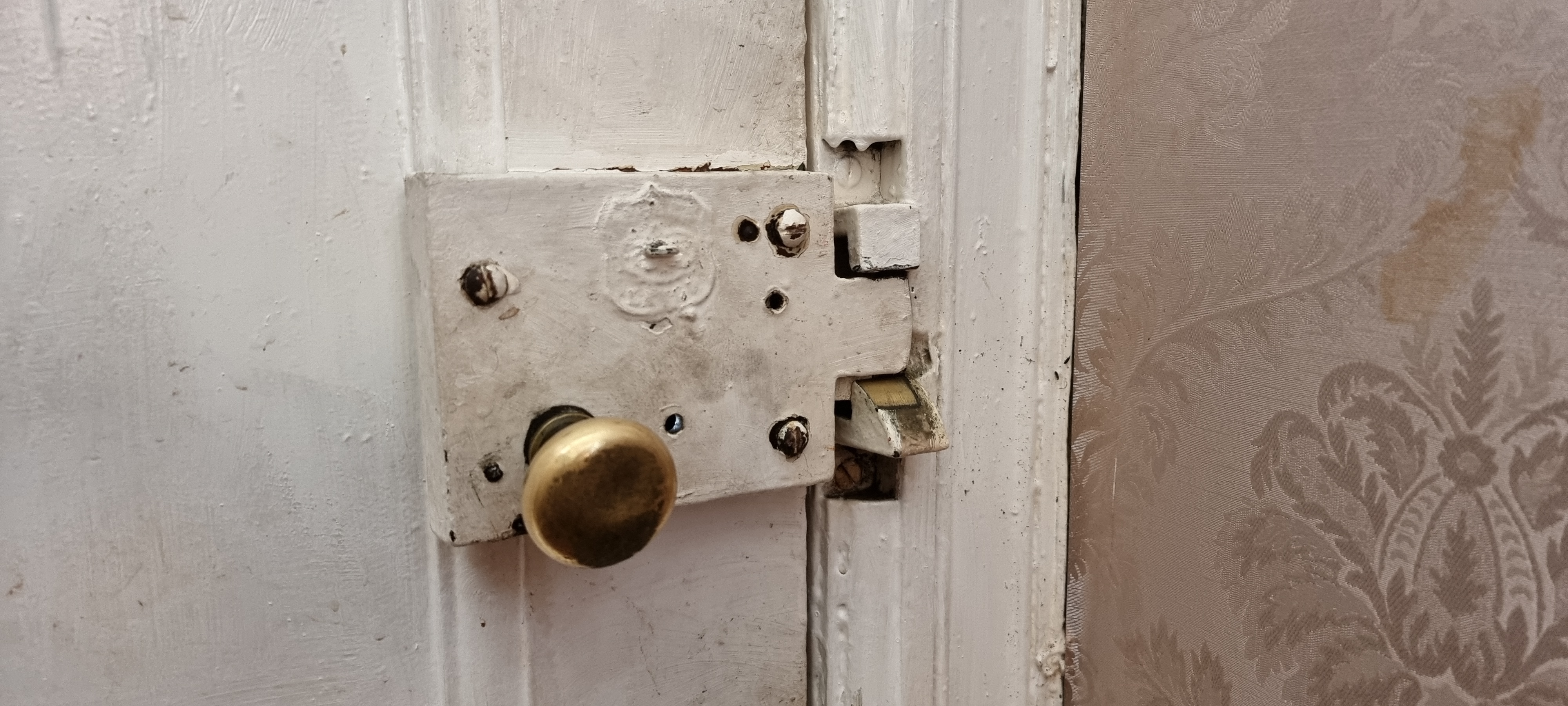
This was actually quite a quick job, once the original screws were dug free of paint! That took about 20 minutes on the client door.
The original Chubb, a “Rim Nightlatch” had “gone faulty” and another locksmith had rather overcharged to gain entry, luckily without damage. A second locksmith had then attended and disabled the lock by driving in a screw.
The customer, having grown to rather like her antique lock that actually locked her door, asked me to put it back into operation. So of course I said yes. Peering through the keyhole, there was a large obstruction, which I determined was a broken lever spring, and there was no way it would come out the lock whilst in place. Hence the 20 minutes removing many, many years of paint to get access to the screw heads.
Once removed, I took it to my little workshop and got it apart. Sure enough, it was a broken spring. An easy fix. I also cleaned the insides of over 120 years of dirt and scraped off some of the paint that had got inside. The key tested terribly though, and I worried that it wouldn’t work when the lock was replaced. Also, there’s always the “less is more” restore-to-working vs the “full restoration” where I will carefully remove paint, polish brass and refinish the “Jappaned” black. This was the former, the owner just wanted her door to lock like it used to!
Once the lock was back on the door, the customer, well used to the key, popped her door open in a second without even a wiggle – she’s got the knack! – and also tested the other two keys, which worked perfectly.
However, it wasn’t all plain sailing, as the exit knob for some reason didn’t quite work cleanly. I stripped the lock again, and added a spacing washer, which accounted for some of the wear inside, and bingo, it worked perfectly.
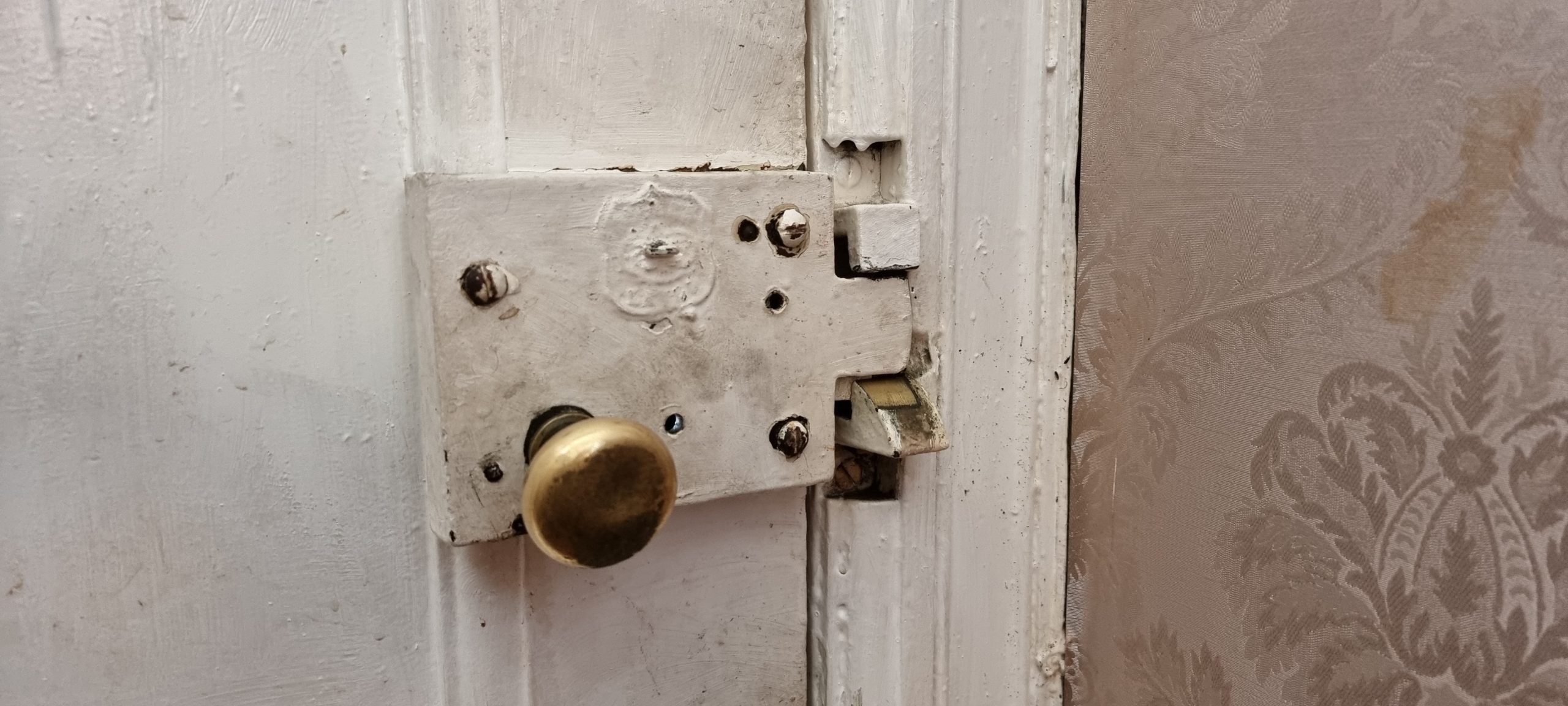
Happy customer!